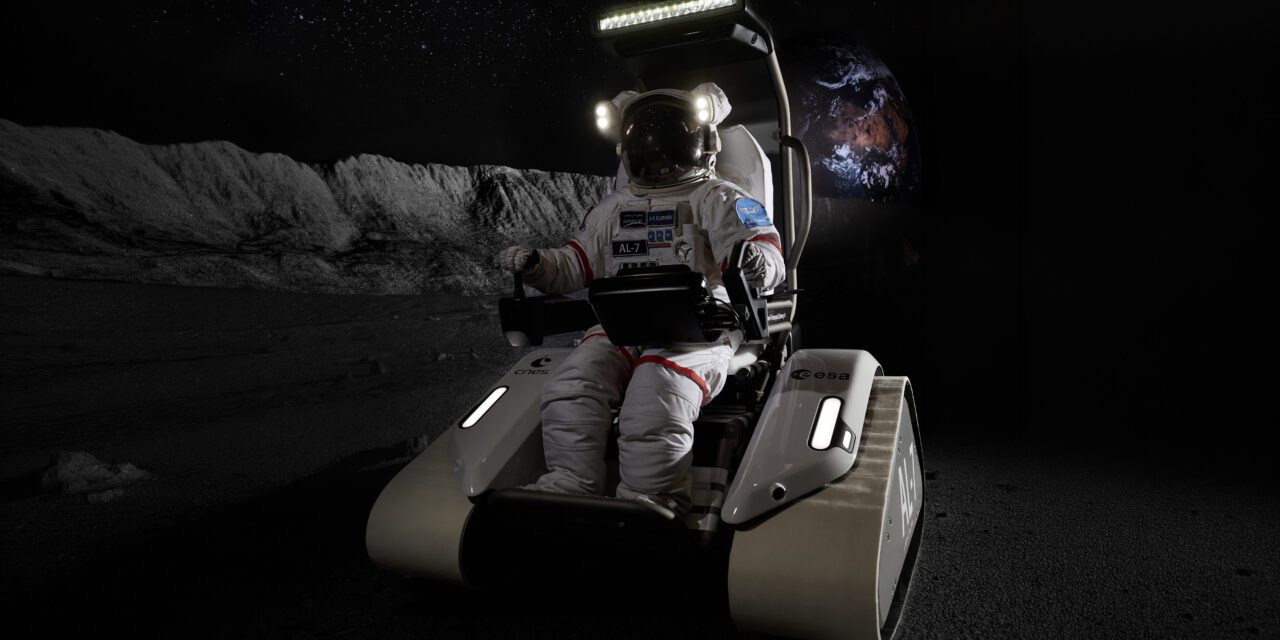
Monaco-based Venturi Space has unveiled ALTA LUNA, a new lunar utility vehicle featuring an onboard system capable of monitoring an astronaut’s health in real time and returning them autonomously to base should they become unwell.
The vehicle’s electronic system is designed to connect directly to an astronaut’s spacesuit, collecting health data throughout a mission. The same interface also provides the pilot with essential information for driving and mission safety, including alerts relating to the wider space environment, such as an approaching solar storm.
With ALTA LUNA, Venturi Space is exploring tracked mobility for the first time within its lunar programmes, a deliberate design choice aimed at allowing the vehicle to climb steeper slopes than a wheeled architecture would permit.
Good Morning Monaco ☀️
The day’s Monaco news in your inbox every morning. Free, unsubscribe anytime.
🔒 We won’t spam you or sell your data. Changed your mind? Unsubscribe with one click at the bottom of any email.
The rover runs on the same battery and battery management system developed by Venturi Space that also equips CLV-1, Venturi Astrolab’s crewed lunar vehicle selected by NASA for the Artemis campaign, tying ALTA LUNA directly into the broader technology platform the Monaco-based company has been building since 2021.
The unveiling comes fifteen months after Venturi Space first revealed its MONA LUNA rover, and as the launch of FLIP to the lunar South Pole draws closer, marking another step forward for a company still just five years into its existence.
Gildo Pastor, President of Venturi Space, said: “I enjoy designing vehicles for extreme environments, but above all I like to see them prove their value in real-world conditions. I will therefore devote all the necessary energy to ensuring that ALTA LUNA supports the first inhabitants of the Moon in their daily lives.”
Dr Antonio Delfino, Director of Venturi Space, added: “On the Moon, we will need to build, develop sites, transport, maintain and connect. We will face challenges similar to those of industrialisation on Earth: transport routes, habitats, infrastructure and logistics. This will require a range of specialised mobility solutions capable of operating as a fleet and carrying out a wide variety of missions. This is the new phase of lunar activity that we are preparing for.”