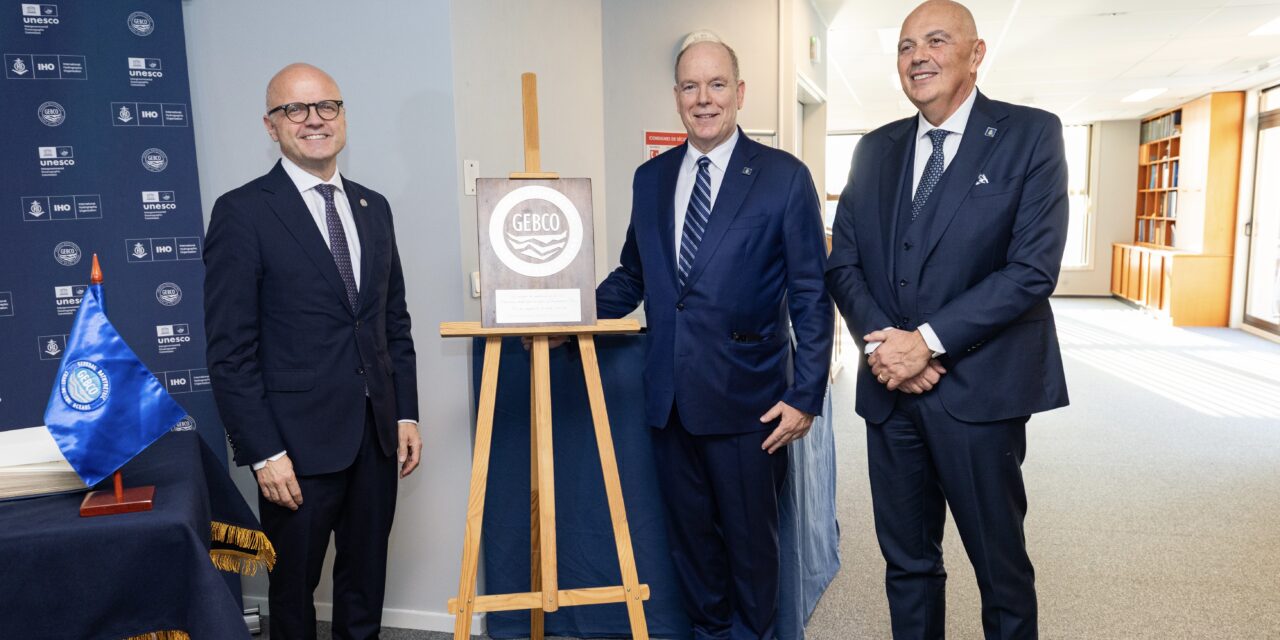
His Serene Highness Prince Albert II officially inaugurated a new permanent secretariat dedicated to mapping the world’s ocean floors on Tuesday, October 13, marking a significant step in international efforts to improve knowledge of the seabed.
The new office of the General Bathymetric Chart of the Oceans (GEBCO) has been established at the headquarters of the International Hydrographic Organization (IHO) in Monaco. Its creation is intended to strengthen international coordination, support scientific initiatives and accelerate progress in mapping the ocean floor.
The inauguration took place in the presence of participants attending a meeting of the IHO. Among those present were Isabelle Berro-Amadeï, Monaco’s Minister of External Relations and Cooperation, and Vidar Helgesen, Executive Secretary of UNESCO’s Intergovernmental Oceanographic Commission.
Good Morning Monaco ☀️
The day's Monaco news in your inbox every morning. Free, unsubscribe anytime.
The permanent secretariat will have a dedicated team tasked with supporting GEBCO’s activities and advancing its long-term objectives. Its responsibilities will include developing international mapping initiatives, encouraging the sharing of oceanographic data and establishing funding partnerships to support projects around the world.
Rear Admiral Luigi Sinapi, Secretary-General of the IHO, highlighted the importance of the initiative, saying that the technologies needed to achieve a comprehensive understanding of the oceans are now available. He said the new secretariat would provide the organisational capacity and human resources needed to turn that ambition into reality.
Despite advances in marine science, more than 70% of the ocean floor remains unmapped to modern standards. Improving bathymetric data — measurements of the depth and shape of the seabed — is essential for a wide range of activities, including scientific research, marine spatial planning, environmental protection and the sustainable management of ocean resources.
Detailed seabed mapping also contributes to tsunami early-warning systems and helps researchers better understand the underwater environment. UNESCO’s Vidar Helgesen said the new secretariat would strengthen institutional cooperation and build closer links with the international ocean community, supporting a new chapter in ocean exploration.
The initiative also builds on a long-standing connection between Monaco and oceanographic research. The origins of GEBCO date back to the early 20th century, when Prince Albert I of Monaco recognised the lack of reliable information about large areas of the world’s oceans. Under his initiative, the first GEBCO charts were published in 1903, drawing substantially on data collected during his oceanographic expeditions.
Today, the programme operates under the joint responsibility of the IHO and UNESCO’s Intergovernmental Oceanographic Commission, bringing together international expertise to improve understanding of the seabed.
Monaco’s Government will finance the new secretariat for an initial period of three years. Sam Harper, Deputy Director of the IHO, will lead the office as Head of the GEBCO Secretariat.
The establishment of the permanent office reinforces Monaco’s role in international oceanographic cooperation, with the long-term objective of making knowledge of the planet’s seabed accessible to all.