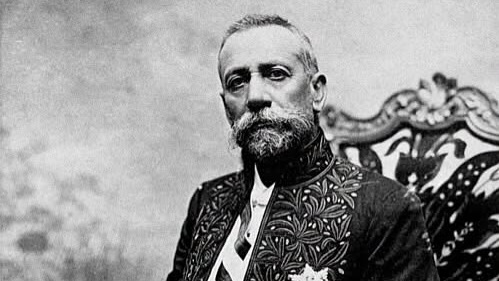
On September 10, 1889, exactly 137 years ago, Albert I became Prince of Monaco following the death of his father, Charles III, on that very same day, a pivotal moment for a man who would go on to reshape both the Principality and the field of oceanography itself.
Nicknamed the “Scientist Prince” or the “Navigator Prince,” Albert I had already developed a deep fascination with the sea long before taking the throne. His interest in ocean exploration took hold from around 1870, and over the course of his life he personally organised and led 28 oceanographic campaigns between 1885 and 1915, journeys undertaken during the summer months that typically lasted between seven and fourteen weeks. Sailing aboard vessels including L’Hirondelle and the Princesse-Alice, considered among the finest oceanographic ships of their era, Albert I and his teams of biologists, zoologists, botanists and geographers helped produce the first maps of the world’s ocean depths, work so precise it remained in use until 1944.
His scientific curiosity extended well beyond the world’s oceans. Between 1898 and 1907, Albert I made repeated voyages to the Arctic and the Svalbard archipelago, including an ambitious 1898-99 expedition that aimed to reach the North Pole, at a time when these regions remained largely unknown to science. A glacier in Svalbard, the Monacobreen, still carries his name today. He also took a keen interest in anthropology and palaeontology, founding the Anthropological Museum in Paris in 1902 and the Institute of Human Palaeontology the following year.
Good Morning Monaco ☀️
The day’s Monaco news in your inbox every morning. Free, unsubscribe anytime.
🔒 We won’t spam you or sell your data. Changed your mind? Unsubscribe with one click at the bottom of any email.
The most lasting legacy of Albert I’s scientific passion came in 1910, when he opened the Oceanographic Museum of Monaco, funded in large part through the income of the Monte-Carlo casino. The museum remains one of the Principality’s defining institutions to this day, and was followed six months later by the founding of the Oceanographic Institute in Paris, in January 1911. In recognition of his contributions to science, Albert I was elected a member of the British Academy of Sciences in 1909, and received an honorary gold medal from the American Geographical Society in 1921, where he was formally recognised as the “Prince Scientist.”
Albert I’s reign extended well beyond science, too. He introduced sweeping political, social and economic reforms during his time as Sovereign, including granting Monaco its first constitution in 1911, a move that brought an end to absolute monarchy in the Principality and made him deeply popular among the Monégasque people.
More than a century later, his legacy continues to shape Monaco’s identity. His great-great-grandson, His Serene Highness Prince Albert II, has followed directly in his footsteps, visiting both the North and South Poles and founding the Prince Albert II of Monaco Foundation to continue the environmental and scientific mission his ancestor first set in motion. A true visionary Prince, Albert I’s scientific legacy continues to shine through in Monaco today.
Image courtesy of Palace Archives