
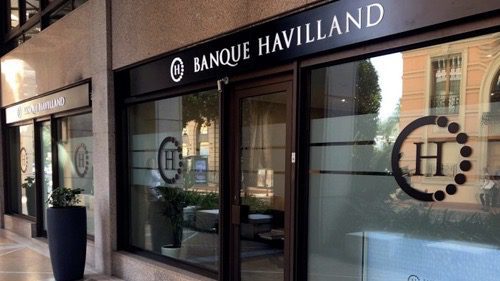
A €3 million dividend payment, received in January 2024 by a Russian client based in the United Arab Emirates and transferred just three days later as a loan to a company whose accountant was based in the Philippines, was among the transactions Monaco’s financial watchdog flagged as going unscrutinised, according to Monaco-Matin‘s reporting on a €1 million fine handed down against Havilland Bank. The same client, the outlet reports, had business ties to a Russian oligarch subject to asset-freezing measures since March 2022.
The fine, issued by the Autorité Monégasque de Sécurité Financière (AMSF) at the end of June 2026, forms part of the Principality’s ongoing enforcement push against money laundering and terrorist financing, and lands as Monaco edges closer to exiting the Financial Action Task Force’s grey list by the end of the year, a process that continues to draw close scrutiny over how effectively its legislative reforms are actually being enforced. According to Monaco-Matin, the AMSF issued a second, smaller sanction the same month, a €75,000 fine, €25,000 of it suspended, against Guardian Management, a service provider linked to foreign legal structures including companies, foundations and trusts.
Havilland’s case drew particular attention after the AMSF’s sanctions body insisted on naming the bank publicly, despite its request for anonymity, made on the grounds of a recent change in ownership, its limited size and economic weight, and concerns over reputational damage. The bank has since been renamed Moncrief Private Bank, following the withdrawal of its Luxembourg parent company’s licence by the European Central Bank in 2024, the same year AMSF inspectors were examining its Monégasque operations on Boulevard des Moulins, where 19 staff then managed €449 million in assets across 360 client accounts.
Good Morning Monaco ☀️
The day's Monaco news in your inbox every morning. Free, unsubscribe anytime.
According to Monaco-Matin’s account of the AMSF’s 53-page report, seven separate failings were identified, spanning risk identification, client due diligence, ongoing vigilance, transaction monitoring, the handling of atypical transactions, and internal organisation. Three of those failings were treated as repeat offences, given the bank had already been inspected in 2017 and sanctioned by Monaco’s then-Minister of State in October 2021, corrective steps that evidently failed to resolve the underlying issues. The AMSF noted that while the bank itself was modest in size, it belonged to an international banking group with the resources needed to properly staff and equip its local branch to meet its compliance obligations.
Among the specific shortcomings detailed, the report found a flawed risk-classification methodology had led the bank to significantly underestimate its clients’ risk profiles, despite a client base made up of 45 percent non-resident clients, foreign wealth-holding companies, and clients presenting elevated risk factors. In reality, high and very-high-risk clients made up 31 percent of the bank’s clientele, well above the 18 percent the bank had recorded, together accounting for 61 percent of assets under management. The AMSF also cited insufficient understanding of clients’ financial backgrounds and the origin of their wealth in several high-risk files, along with two business relationships maintained despite the bank being unable to meet its due-diligence obligations, including one case where a beneficial owner was only identified in 2018, five years after the relationship began.
The bank’s internal structure was also criticised as poorly matched to its risk exposure, with just two staff members in its compliance department handling more than 20,000 alerts in 2023, and a lack of operational autonomy, with the general director required to personally approve any atypical transaction.
Havilland’s lawyers contested all seven findings in full. In a statement provided to Monaco Life, Moncrief Private Bank said its new shareholders had invested in strengthening its financial crime controls since the change in ownership, moving away from the previous owner’s general policies in favour of bank-specific procedures, and had commissioned an independent compliance audit backed by an expanded compliance team.
Monaco’s wider banking sector includes a number of major international institutions, among them UBS, which maintains a significant presence in the Principality as part of the broader financial services landscape the AMSF continues to monitor as part of its enforcement efforts.