
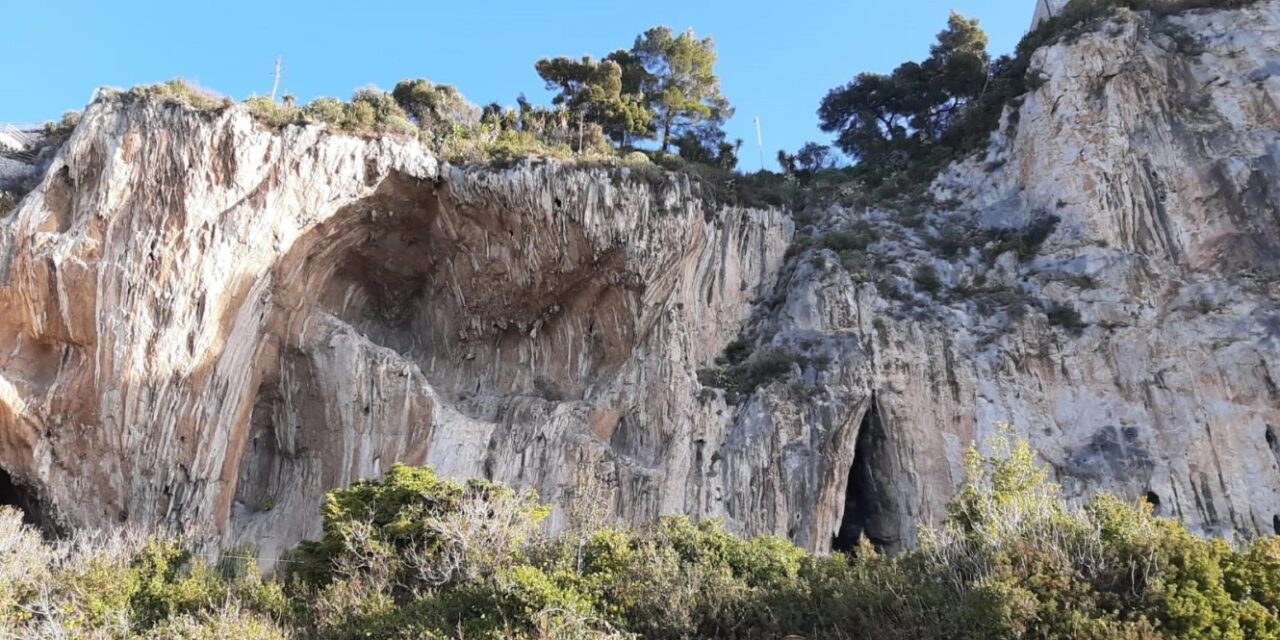
Fresh archaeological research is set to shine a spotlight on the Prince’s Cave near Ventimiglia, an historic site owned by the Sovereign that may hold important clues to the lives of Neanderthals more than 40,000 years ago…
The Grimaldi Caves, also known as Balzi Rossi Prehistoric Museum & Archaeological Area, are a famous cluster of Paleolithic caves and rock shelters in Ventimiglia, Italy, near the French border. The Grotte du Prince (Prince’s Cave) is the largest and deepest cave in this dramatic coastal limestone complex.
The Prince’s Cave and surrounding caves been explored for almost two centuries. Excavations began under Prince Florestan I in 1846 before Prince Albert I transformed the project by introducing rigorous archaeological methods and founding Monaco’s Museum of Prehistoric Anthropology in 1902. Among the discoveries were prehistoric tools, ancient human remains and distinctive horned animal skulls that continue to intrigue researchers.
As reported by Monaco Matin, renewed interest follows comparisons with Cueva Des-Cubierta near Madrid, where archaeologists uncovered evidence suggesting Neanderthals deliberately arranged horned animal skulls in what may have been ritual activity. The Prince’s Cave is one of only two known sites to contain a similar concentration of such remains, making it central to ongoing international research.
A team of Spanish scientists recently visited Monaco and the site to begin a collaboration with specialists from the Museum of Prehistoric Anthropology. Researchers hope that further excavations and comparative studies will determine whether the discoveries represent symbolic behaviour, religious practice or another form of ritual shared across Neanderthal Europe.
Excavations are expected to resume following approval from the Prince’s Palace, with researchers hopeful that the next phase of work will help answer longstanding questions about the cognitive abilities and cultural lives of our prehistoric relatives.
Image: princealbert1.mc