
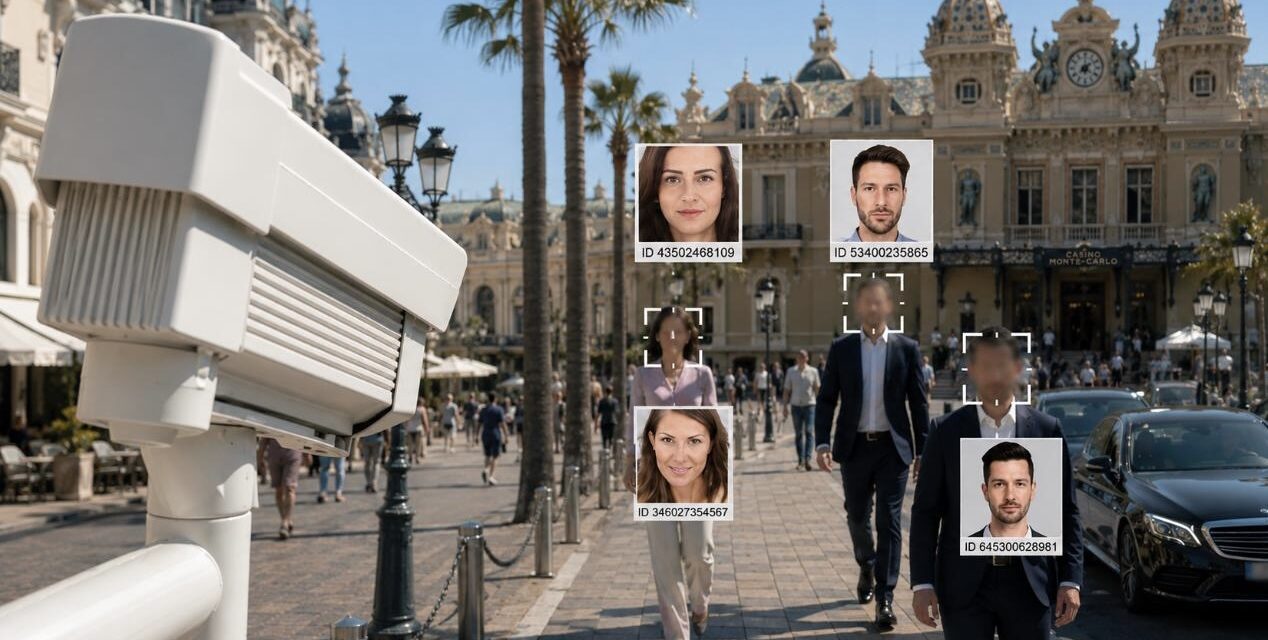
Speaking to Monaco-Matin following a summer marked by security concerns, including the June 29 assassination attempt and a spate of watch and jewellery thefts, Monaco’s Minister of State Christophe Mirmand said the Principality’s video surveillance system could be strengthened through new technology capable of flagging individuals considered unwelcome or out of place within Monegasque territory.
Asked directly whether Monaco’s security had changed following the string of incidents this summer, Mirmand pointed to the speed with which those responsible were identified, praising the efficiency of Monaco’s Public Security Department in conducting rapid judicial investigations. He also placed the incidents in broader context, noting that Monaco recorded 328 public street offences in 2025, fewer than one per day, and said that figure should be weighed against any perception of insecurity among residents, even as that perception is taken seriously.
Pressed on whether the recent incidents would lead to heightened security measures, Mirmand said the assassination attempt in particular had prompted conclusions to be drawn, especially regarding Monaco’s public surveillance systems. While stressing that Monaco remains a particularly safe country thanks to an effective police force equipped with strong technical resources, including its video surveillance network, he said officials were now considering, as other countries have done, complementary tools that could make those systems more effective.
Asked specifically about facial recognition, Mirmand confirmed that a bill had been submitted to establish a legal framework for the technology’s use. He was careful to clarify its intended scope, stressing that the goal was not to enable blanket surveillance of the public, and that no one should feel they could be tracked indiscriminately by such a system. Instead, he said the legal framework would allow authorities to identify specific individuals already subject to a search or investigation more quickly, an objective he tied directly to Monaco’s compact geography and the broader aim of spotting individuals who pose a risk or don’t belong more rapidly.
Questioned on the technology’s limits, particularly given that the suspect in the June 29 attack had disguised their appearance, Mirmand acknowledged the challenge but pointed to the speed with which Monaco’s judicial police, working under the authority of the Attorney General, were still able to establish the perpetrator’s identity using existing technical tools. He noted that while someone may attempt to conceal their physical appearance, behavioural patterns can still raise flags, allowing Public Security to take a preventive approach through identity checks.
Asked whether the assassination attempt had affected Monaco’s tourist season or prompted any residents to leave, Mirmand said tourist numbers in Monaco’s streets showed no sign that the event had dampened visitor numbers, and that he was not aware of any residents leaving out of concern for the security that had originally drawn them to settle in the Principality. He added, however, that reinforcing Monaco’s resources, methods and vigilance remained an ongoing priority, in order to guard against any future events that could threaten the Principality’s security.