
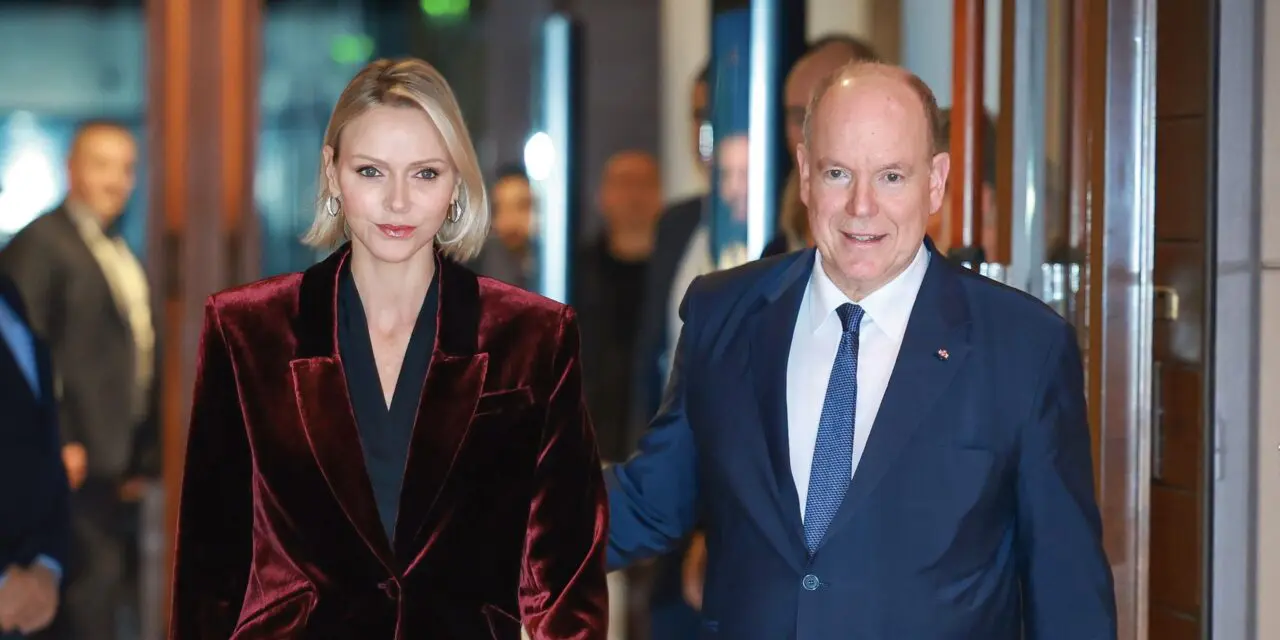
Her Serene Highness Princess Charlene is set to take charge of Monaco’s Regency should His Serene Highness Prince Albert II die or become unable to carry out his duties while Hereditary Prince Jacques is still too young to rule, under changes to the Principality’s constitutional arrangements announced ahead of National Day.
The Sovereign confirmed the plans in his annual National Day interview with Monaco-Matin, revealing that a new Sovereign Ordinance is expected to be finalised before the end of 2026. The reform would formally designate his wife as Regent, with responsibility for presiding over a restructured Regency Council.
Prince Albert explained that the existing legislation had already been amended several times and now required a more comprehensive review. He presented the planned changes as a matter of preparation rather than a response to any immediate concern.
Good Morning Monaco ☀️
The day’s Monaco news in your inbox every morning. Free, unsubscribe anytime.
🔒 We won’t spam you or sell your data. Changed your mind? Unsubscribe with one click at the bottom of any email.
With the Sovereign approaching his 69th birthday and Prince Jacques turning 12 in December, the announcement addresses the possibility that Monaco’s heir could still be a minor if he were required to succeed his father.
Prince Albert was keen to reassure residents that there was no urgency surrounding the decision, describing the proposed update as a measured step to ensure the country’s constitutional arrangements are prepared for the future.
The appointment would give Princess Charlene a clearly defined constitutional responsibility during any period of Regency. She would lead the reformed council, providing continuity at the head of the Principality until the circumstances allowed the succession arrangements to proceed.
The Regency announcement formed part of a broader discussion about the challenges facing Monaco, including the need to maintain strong connections between generations.
Prince Albert spoke about encouraging younger residents to play a greater part in public life, pointing to opportunities for youth involvement through bodies including the Conseil National des Jeunes, the youth section of the Economic, Social and Environmental Council, and the junior municipal project.
He also highlighted the responsibility to support older residents as life expectancy increases, with particular attention to preserving independence, dignity and social connections. He warned that the growing importance of digital services should not leave elderly people isolated or excluded.
On international affairs, the Sovereign reflected on a period marked by armed conflicts, environmental pressures and uncertainty surrounding artificial intelligence. While recognising the opportunities offered by emerging technologies, he also acknowledged the risks they present.
He argued that Monaco and other countries cannot address such challenges independently, stressing the importance of cooperation between governments and international institutions. He pointed to the Principality’s established institutions, financial position and administrative capacity as important foundations for facing future difficulties.
Philanthropy was another prominent theme. Prince Albert discussed the recent initiative launched with Princess Charlene to bring major philanthropic figures together to consider how private funding can contribute to addressing global challenges.
He described philanthropy as a source of flexibility and experimentation, capable of helping identify emerging problems and develop new responses. However, he emphasised that private initiatives should complement rather than replace public action, with democratic processes remaining essential to protecting the public interest.
The planned Regency reform is expected to be formalised through a Sovereign Ordinance before the end of 2026. Until the new text is adopted, Monaco’s existing legal arrangements will remain in force.
Image courtesy of Communication Department – Stéphane Danna