
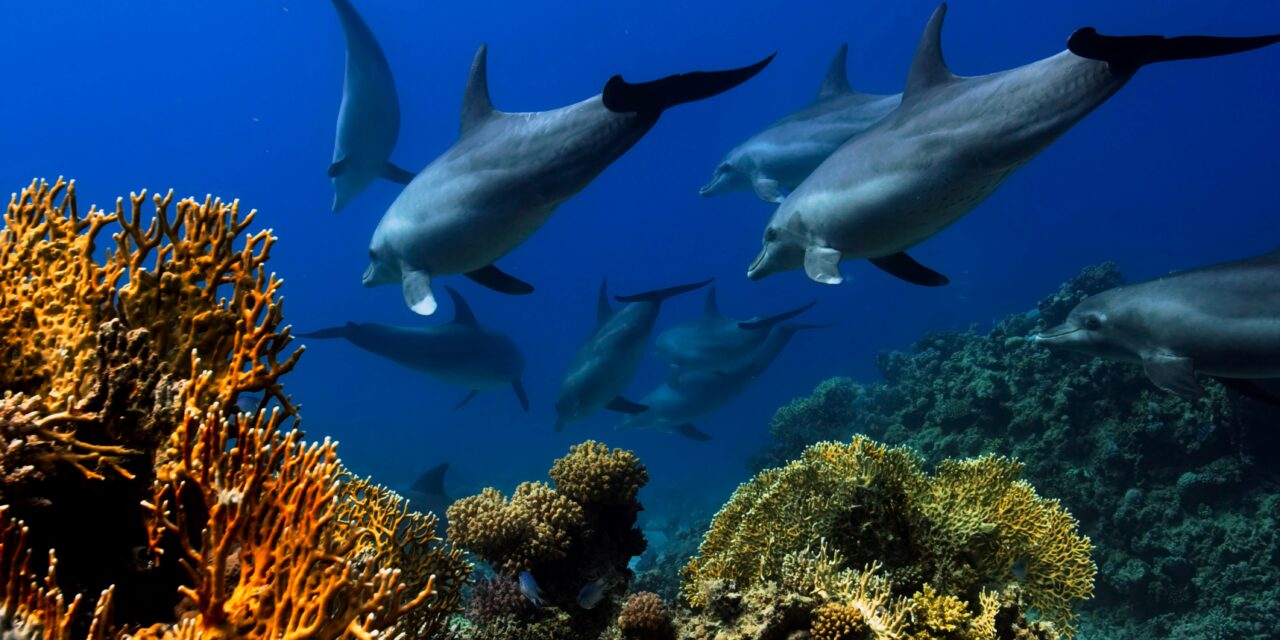
Scientists from ACCOBAMS, the Agreement on the Conservation of Cetaceans of the Black Sea, Mediterranean Sea and Contiguous Atlantic Area, set sail on Tuesday for a new scientific mission in the Mediterranean, continuing international efforts to monitor and protect whales, dolphins and porpoises…
The scientific research vessel Song of the Whale has made a stop in Monaco during the second ACCOBAMS Survey Initiative, an international mission updating knowledge of cetaceans and other marine wildlife across the Mediterranean.
The 21-metre vessel departed Vilamoura, Portugal, on June 11 and is combining observations at sea with aerial surveys. After leaving Monaco, the expedition will continue towards Corsica and Sardinia before heading to Libya, Malta and Cyprus.
The first basin-wide survey, conducted jointly by 24 countries in 2018, produced the first comprehensive maps showing the distribution and estimated abundance of Mediterranean cetaceans. Researchers recorded approximately 425,000 striped dolphins and 1,700 fin whales, alongside sea turtles, sharks, rays and several seabird species.
Eight years later, scientists are seeking to identify changes in population numbers, distribution and habitat use while examining the possible effects of rising sea temperatures. Researchers have already observed species associated with warmer waters that were far less evident during the previous survey, potentially indicating wider changes within the Mediterranean ecosystem.
Different observation methods are used depending on the species. Some large marine animals are easier to locate from aircraft, while others are more effectively detected from a research vessel using visual and acoustic monitoring.
The data collected will support scientific research and future conservation measures across the region. ACCOBAMS, established by international treaty in 1996, coordinates the protection of whales, dolphins and porpoises throughout the Mediterranean, Black Sea and adjoining Atlantic waters.
Image: Oleksandr Sushko