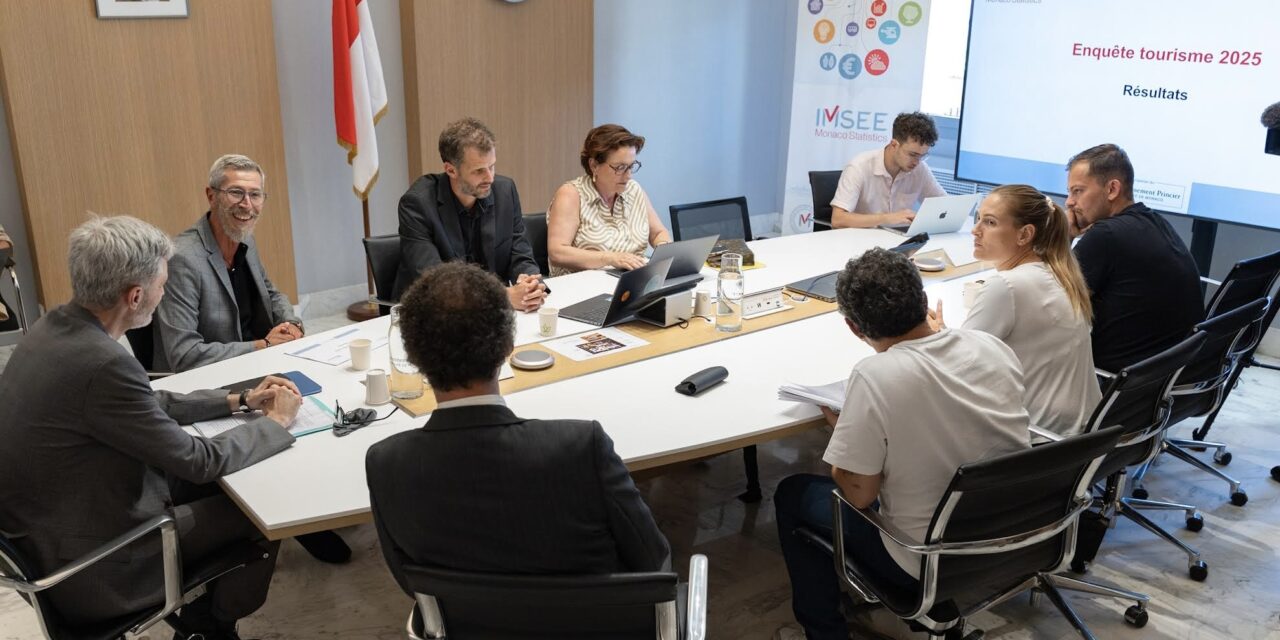
Monaco’s tourism sector generated nearly €1.4 billion in direct visitor spending during 2025, as the Principality welcomed almost 6.7 million visits over the course of the year, according to new figures released by the Monaco Institute of Statistics and Economic Studies (IMSEE) and the Directorate of Tourism and Conventions (DTC).
The findings, unveiled on Tuesday, July 7, are based on a survey of more than 17,000 visitors conducted between January 2025 and January 2026, providing a comprehensive overview of visitor behaviour, spending patterns and tourism’s contribution to the Monegasque economy.
The report shows that day visitors continued to account for the overwhelming majority of arrivals, representing 92.5 per cent of all visits, while tourists staying at least one night made up 7.5 per cent. Although fewer in number, overnight visitors generated a disproportionate share of economic activity, highlighting their importance to the Principality’s tourism strategy.
Good Morning Monaco ☀️
The day's Monaco news in your inbox every morning. Free, unsubscribe anytime.
In total, visitors spent more than 9.3 million days in Monaco during the year, including over 1.4 million overnight stays. Tourists remained in the Principality for an average of 3.8 days, while excursionists stayed for around 1.2 days. Hotels remained the preferred accommodation choice, accounting for more than seven out of every ten overnight stays.
France continued to be Monaco’s largest source market, with French residents making nearly half of all visits. Overnight tourists, however, were considerably more international, with 42 per cent arriving from countries outside the European Union.
Couples represented the largest visitor group at 37 per cent, followed by families at 32.7 per cent. Leisure and holidays remained by far the main reason for visiting, accounting for almost 95 per cent of all trips.
Cars and rental vehicles were the most common means of travelling to Monaco, ahead of rail services, while tourists staying in the Principality most frequently relied on taxis during their visit.
The economic impact of tourism remained substantial throughout 2025. Day visitors spent an average of €76 per day, while overnight tourists spent an average of €348 each day. Across the duration of their visits, this equated to average spending of €85 per excursionist and €1,670 per tourist. Visitors from the Middle East recorded the highest daily expenditure, exceeding €1,000 per person.
Overall, direct visitor spending reached almost €1.4 billion, representing 6.8 per cent of Monaco’s total business turnover outside the financial and insurance sectors. Although overnight tourists accounted for fewer than one in ten visits, they generated 61.4 per cent of the tourism sector’s economic impact.
Commenting on the results, Director of Tourism and Conventions Guy Antognelli said the Principality’s objective remains focused on attracting visitors who contribute greater value to the local economy rather than simply increasing overall visitor numbers.
“Our ambition is not to welcome ever greater numbers of visitors, but to attract more tourists who generate significant added value for Monaco’s economy,” he said. “All of the Directorate of Tourism and Conventions’ initiatives are designed to support sustainable, high-quality growth.”
The full report is available through IMSEE and includes detailed analysis of visitor demographics, travel habits and tourism expenditure across the Principality.