
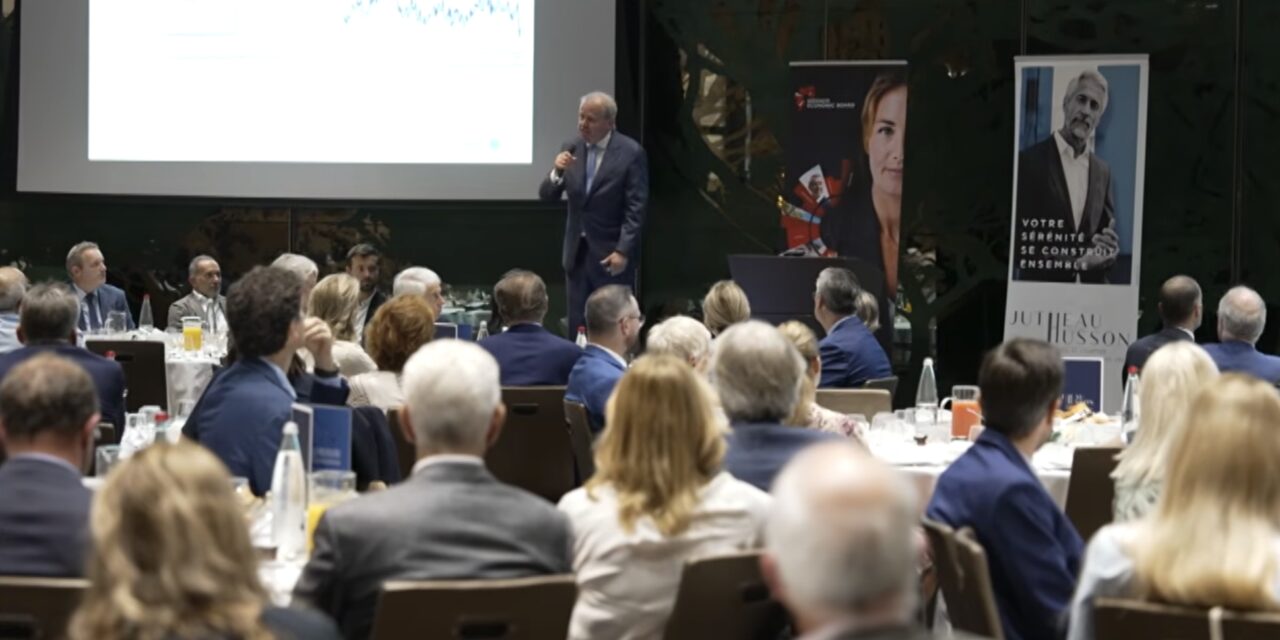
The global economy is proving surprisingly resilient despite geopolitical tensions, rising energy costs and higher interest rates, according to economist Jean-Pierre Petit…
The president of Cahiers Verts de l’Économie was speaking after appearing at the Monaco Economic Board’s first meeting following the summer break, where he presented his assessment of the changing macroeconomic landscape.
Petit said global growth was running at an annualised rate of around 3.5 per cent, supported particularly by heavy investment in technology. The United States and several Asian economies, including Taiwan, South Korea and India, are performing strongly, whilst China is maintaining annualised growth of around 4.5 per cent.
Europe presents a more mixed picture. Germany is showing signs of recovery and Spain remains resilient, whilst Petit identified France as a notable weak point.
Despite the impact of the war in Iran and higher energy prices, he said households and the wider global economy had so far proved more resilient than might have been expected.
However, Petit warned that rising long-term interest rates were creating increasing pressure on investment, housing markets and public finances.
He argued that higher borrowing costs could also make it harder for governments to finance the enormous investment required for the energy and digital transitions, alongside growing defence expenditure in response to geopolitical change.
Image: Monaco Info