
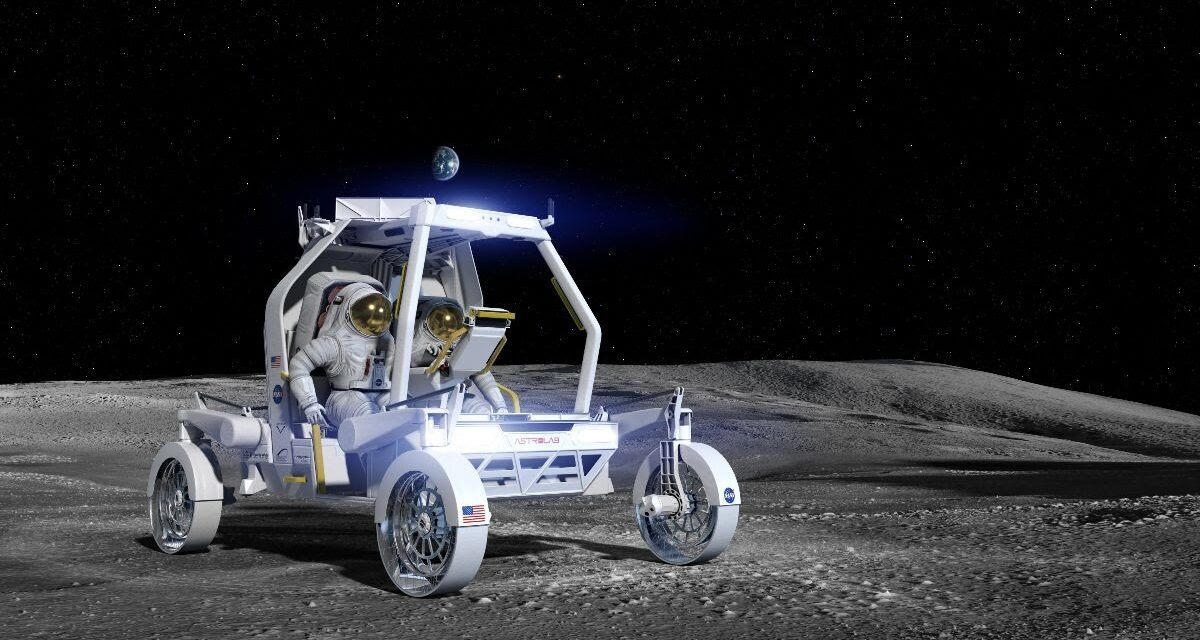
NASA has selected Venturi Astrolab as one of two providers for a new crewed lunar rover designed for the Artemis Moon missions, marking a major milestone for Monaco-founded Venturi Space, whose technology will power critical systems aboard the vehicle.
The new rover, known as CLV-1 (Crewed Lunar Vehicle), is expected to support future astronaut missions at the lunar South Pole as part of NASA’s long-term objective of establishing a sustained human presence on the Moon. NASA anticipates the first deployment of the new lunar mobility systems by 2028.
Venturi Space, headquartered in Monaco and specialising in advanced electric mobility technologies, will provide several of the rover’s most important components, including its wheels, battery systems and battery management technology.
Good Morning Monaco ☀️
The day’s Monaco news in your inbox every morning. Free, unsubscribe anytime.
🔒 We won’t spam you or sell your data. Changed your mind? Unsubscribe with one click at the bottom of any email.
The CLV-1 rover is based on Astrolab’s FLEX platform and has been adapted to meet NASA’s revised strategy for smaller, more agile lunar vehicles capable of both crewed and remote operations. The rover is intended to transport astronauts, equipment and scientific payloads across the harsh terrain of the lunar South Pole, where temperatures can fluctuate between minus 240 and plus 130 degrees Celsius.
Among the standout technologies developed by Venturi Space are its hyper-deformable lunar wheels, engineered to maintain traction and stability on uneven surfaces while resisting extreme temperature changes. The company has also designed high-performance batteries intended to withstand extended lunar nights lasting up to two Earth weeks, alongside a sophisticated battery management system responsible for monitoring performance and safety during missions.
The announcement represents a significant achievement for Venturi Space, which has expanded rapidly since entering the aerospace sector in 2021 after building its reputation in high-performance electric vehicles and Formula E racing.
Gildo Pastor, president of Venturi Space, praised the collaboration with Astrolab and described the NASA selection as recognition of the technological expertise developed by teams based in Monaco, France and Switzerland.
The project also strengthens Monaco’s growing visibility within the international space sector. Venturi Space has increasingly positioned itself as a European leader in extraterrestrial mobility systems, with ambitions extending beyond NASA partnerships.
The technologies developed for CLV-1 will also form the basis of MONA LUNA, Venturi Space’s planned European lunar rover programme, which could see a fully European-designed rover sent to the Moon around 2030.
Before that, another Astrolab rover equipped with Venturi technology — the FLIP rover — is scheduled for a lunar mission during the second half of 2026, further accelerating the Principality’s involvement in next-generation space exploration.