
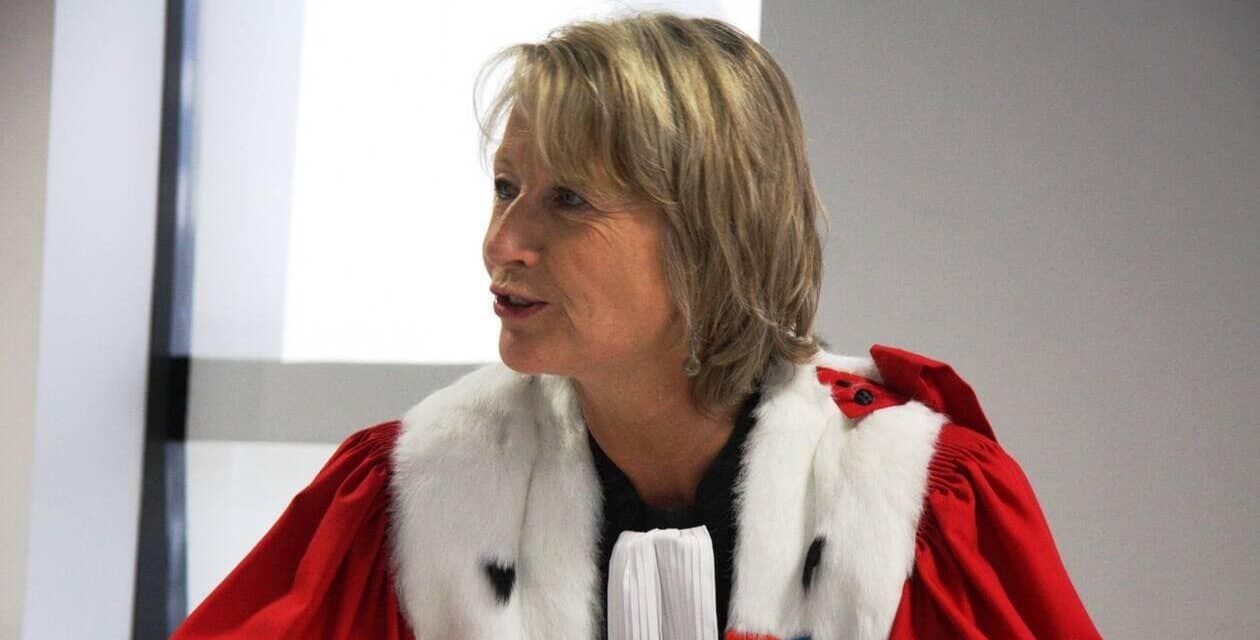
Former Monegasque government minister Sylvie Petit-Leclair has joined the Paris law firm Briard & Bonichot, a move that places her alongside several prominent figures who have become increasingly critical of Monaco’s current inner circle, according to information published by La Lettre on Friday, May 29.
Petit-Leclair, a former French magistrate, served as Monaco’s Attorney General from 2018 before entering the government in 2022. Her departure from public office came months before the scheduled end of her mandate, following a period of growing tensions within the Principality’s institutions.
According to La Lettre, Petit-Leclair’s new role marks a significant shift from public service to private practice and brings her into close professional association with lawyer François-Henri Briard, a leading member of France’s Conseil d’État and Court of Cassation.
Good Morning Monaco ☀️
The day’s Monaco news in your inbox every morning. Free, unsubscribe anytime.
🔒 We won’t spam you or sell your data. Changed your mind? Unsubscribe with one click at the bottom of any email.
Briard is no stranger to Monaco’s political and business circles. He has represented major players in several high-profile disputes, including real estate developer Caroli Immo, whose interests have intersected with some of the Principality’s most closely watched controversies in recent years.
Petit-Leclair’s arrival at Briard & Bonichot also aligns her with a group of former advisers and senior officials who have found themselves increasingly distanced from Monaco’s current power structure.
The group includes Thierry Lacoste, a long-time adviser to Prince Albert II, former palace administrator Claude Palmero, former Chief of Staff Laurent Anselmi, and former Supreme Court president Didier Linotte. All have featured prominently in public debates that followed the publication of the “Dossiers du Rocher,” the series of leaked documents that exposed internal tensions within Monaco’s governing establishment.
Prior to leaving office, Petit-Leclair herself publicly criticised Christophe Steiner, then Chief of Staff to His Serene Highness Prince Albert II, and raised questions regarding financial transparency within the Principality.
Observers note that Briard’s practice has frequently intersected with major Monaco development projects and commercial disputes. The lawyer has represented influential business figures, including members of the Pastor family, and has been involved in litigation affecting significant real estate projects across the Principality.
His representation of the company Plata in proceedings against the Monegasque state notably contributed to delays affecting a major development backed by interests linked to the Pastor group.
The recruitment of a former senior government official with extensive knowledge of Monaco’s legal and institutional landscape is therefore likely to strengthen the firm’s position in future Monaco-related matters.
The move has also reignited discussion over Monaco’s regulatory framework governing transitions from public office to private-sector roles.
Unlike France, where senior public officials may be required to seek approval from the High Authority for Transparency in Public Life before accepting certain private positions, Monaco has no equivalent authority overseeing such appointments.
As a result, Petit-Leclair’s move to private practice did not require independent review, a situation that some governance specialists argue highlights a gap in the Principality’s conflict-of-interest safeguards.
While no rules appear to have been breached, the appointment is likely to fuel further debate about transparency and oversight in Monaco, particularly at a time when relations between former and current members of the Principality’s establishment remain under close scrutiny.