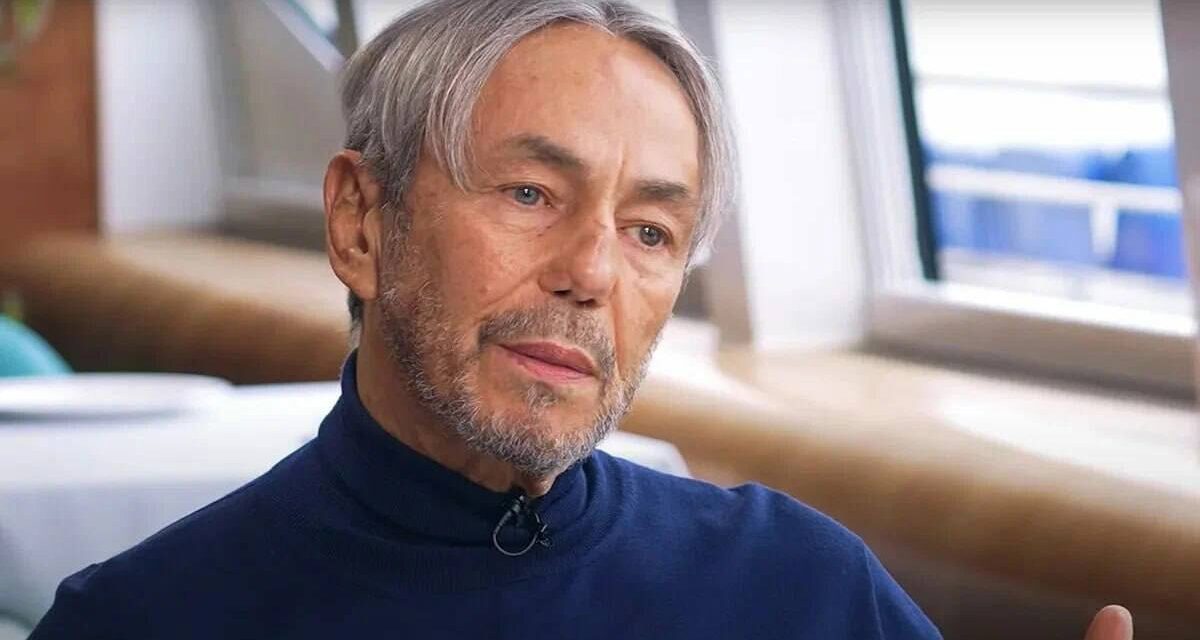
The circumstances surrounding the death of Russian businessman and former Monaco resident Umar Dzhabrailov are drawing renewed scrutiny after his daughter publicly rejected the suggestion that he took his own life.
Dzhabrailov was recently found dead in an apartment in Moscow with a gunshot wound to the head. Authorities have treated the incident as a suicide, but his daughter, Alvina Dzhabrailova, has openly challenged that conclusion, stating that she does not believe her father would have ended his life.
The case has attracted additional attention due to Dzhabrailov’s past connections and controversial reputation. In recent statements, Alvina Dzhabrailova said she has faced harassment following the circulation of leaked correspondence allegedly linking her father to Ghislaine Maxwell, a close associate of Jeffrey Epstein. She has also claimed that she fears for her safety, saying she believes Russian authorities have begun monitoring her social media activity.
Good Morning Monaco ☀️
The day’s Monaco news in your inbox every morning. Free, unsubscribe anytime.
🔒 We won’t spam you or sell your data. Changed your mind? Unsubscribe with one click at the bottom of any email.
Dzhabrailov was a prominent and sometimes polarising figure in Russia’s political and business circles. Of Chechen origin, he previously served as a representative in Russia’s Federation Council. His relationship with the Russian political establishment deteriorated in later years, and he was expelled from President Vladimir Putin’s political party in 2017 following a controversial incident in which he reportedly fired a gun inside a luxury hotel in Moscow.
Known for his outspoken personality, Dzhabrailov once described his rise to wealth in the chaotic years following the collapse of the Soviet Union as that of “a normal guy in a world of gangsters.” In interviews, he spoke candidly about conducting business during a period marked by intense competition and instability, even claiming he often carried a firearm during meetings.
His career was also shadowed by episodes that contributed to his notoriety. In the late 1990s, one of his close associates was found shot dead in the Moscow metro, a killing that further cemented the oligarch’s controversial image.
Around the same period, Dzhabrailov relocated to Monaco, where he spent time in the Principality during the 1990s. His residency there was not without complications. Authorities issued a deportation order against him in 1996, followed by an expulsion order that was later overturned in 2005, allowing him to remain.
As questions continue to swirl around the circumstances of his death, the statements made by his daughter have added another layer of intrigue to a case already surrounded by controversy. Whether investigators will revisit the official conclusion remains unclear, but the story has once again drawn attention to the complex life of a businessman whose career spanned politics, high finance and international connections.