
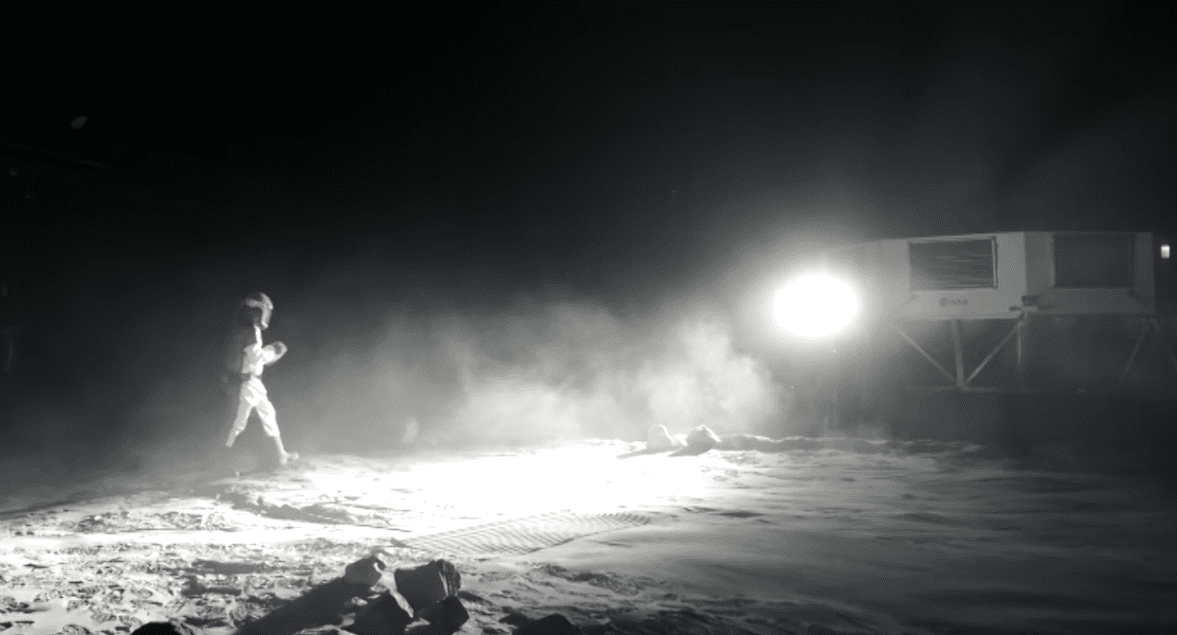
Venturi Space has reached a major milestone in Europe’s return to lunar exploration, with its Mona Luna rover successfully completing its first full-scale tests in Cologne, Germany…
Five months after being unveiled at the Paris Air Show, the European-built rover underwent trials at the German Aerospace Center’s Luna analogue facility, a 700 m² test zone designed to replicate the Moon’s dusty, unstable surface.
Developed by Venturi Space across Monaco, France and Switzerland, Mona Luna is a large-capacity lunar rover conceived to support future European missions. Weighing between 750 and 1,000 kilograms, it is designed to transport up to 350 kilograms of scientific payload, a capability that could prove critical for experiments planned by the European Space Agency and CNES. The rover is intended to be compatible with Europe’s Ariane 6 launcher and ESA’s future Argonaut lunar lander, with a potential mission horizon around 2029.
During the Cologne tests, engineers evaluated Mona Luna’s performance on simulated lunar regolith, a fine, powdery material comparable to cement dust. The rover successfully navigated steep slopes of up to 30 degrees, descended into and climbed out of artificial craters, and demonstrated impressive traction thanks to its deformable Hyper Lunar wheels. Key onboard systems, including batteries developed in Monaco and electronics from Toulouse, also performed as expected.
These conclusive first trials mark a significant step forward for the project. The next phase is already planned, with further testing at ESA facilities scheduled for the first half of 2026 to simulate the critical descent and landing stages, bringing Europe—and Monaco—closer to a new chapter on the Moon.