
The Monte Carlo Masters has already delivered a sharp reminder that the clay season rarely eases players in gently, with early rounds producing a mix of authority at the top and disruption elsewhere in the draw.
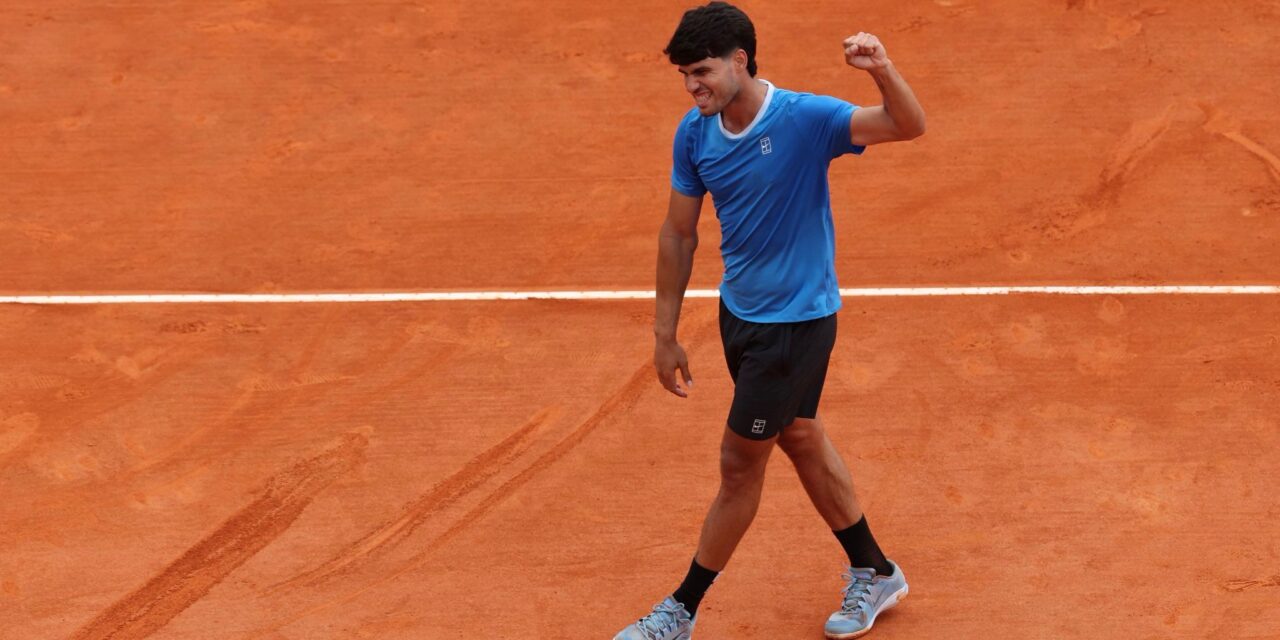
Carlos Alcaraz has begun his campaign like a man intent on setting the tone for the weeks ahead. The defending champion moved through his opener with minimal fuss, striking cleanly and dictating play from the baseline in a performance that suggested he has quickly rediscovered his rhythm on clay. There was little sign of rust, only the controlled aggression that has become his trademark on the surface.
Jannik Sinner has been equally convincing, if not more ruthless. The Italian swept aside his first opponent in emphatic fashion, barely allowing the match to settle before taking it out of reach. His efficiency and composure underline why he is widely seen as Alcaraz’s closest rival right now, and why a potential meeting between the two later in the tournament already feels inevitable.
Not everyone has found the transition to clay so straightforward. Stefanos Tsitsipas, a player with a strong history in Monte Carlo, suffered one of the most notable early exits, beaten by Francisco Cerúndolo. The result continues a difficult run for the Greek, whose level has fluctuated in recent months and who now faces increasing pressure to rediscover consistency on his preferred surface.
Elsewhere, the early rounds have reflected the unpredictable nature of this stage of the season. Matches have swung on fine margins, with players still adjusting to the slower conditions and longer rallies that clay demands. The absence of Novak Djokovic has also subtly shifted the dynamic of the tournament, removing a figure who so often brings stability and control to events of this level.
Behind the leading names, the field remains tightly packed. Alexander Zverev, Andrey Rublev and Casper Ruud are progressing without fanfare, each navigating their opening matches without yet making a definitive statement. That sense of quiet movement through the draw often proves deceptive in Monte Carlo, where momentum can build quickly once the latter rounds come into view.
Conditions have played their part in shaping the early narrative. The courts have appeared heavy, slowing the ball and rewarding patience as much as power. It has favoured those willing to construct points carefully, while exposing any lapse in concentration or footwork.
Even at this early stage, the outline of the tournament is beginning to emerge. The favourites are settling in, the challengers are testing their footing and the first major title of the clay season is starting to take shape. If the opening rounds are any indication, the road to the final will demand both resilience and precision, with little margin for error on a surface that rarely forgives either.