
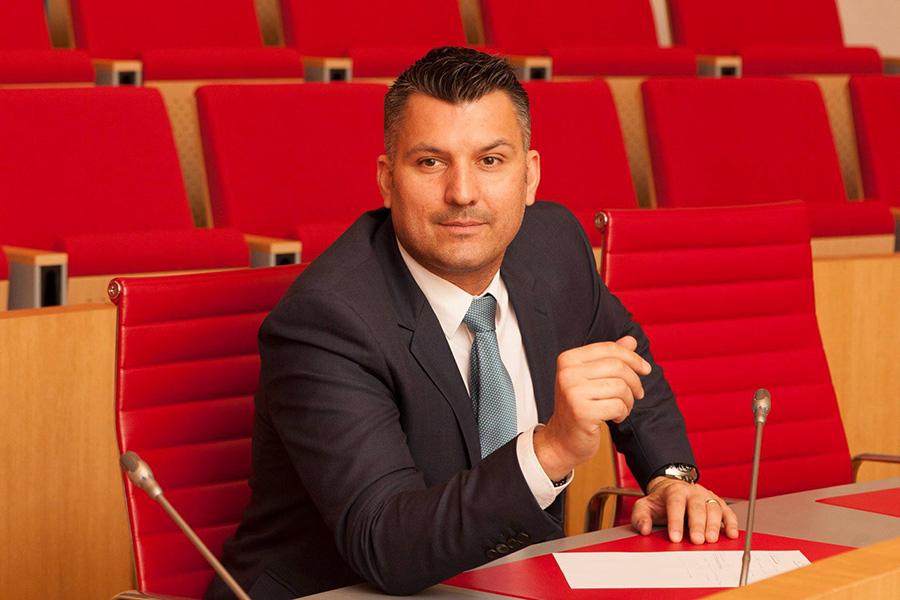
Monaco’s National Council opened its spring session on Thursday, April 2, with a familiar outcome—but an unexpectedly tense atmosphere. Thomas Brezzo was re-elected as President of the assembly, confirming his continued leadership while exposing cracks within the ruling majority and setting the tone for a more confrontational political phase…
The session marked a shift in the chamber’s dynamics following the recent formation of a breakaway minority group, En Avant Monaco. Led by Régis Bergonzi alongside Roland Mouflard and Brigitte Boccone-Pagès, the trio—former members of the majority—now sit in opposition, reshaping the balance within the hemicycle.
While Brezzo’s re-election, along with that of Vice President Jean-Louis Grinda, was widely anticipated, the secret ballot delivered a surprise: four blank votes. Given the composition of the chamber, this indicated that at least one member of the majority withheld support, raising immediate questions about internal unity.
Proceedings began under the stewardship of the chamber’s senior member, Maryse Battaglia, who underscored the importance of a functioning opposition. She welcomed the presence of a minority as a sign of democratic vitality, but warned against turning disagreement into obstruction, stressing that Monaco’s interests must remain paramount.
Tensions surfaced early when Bergonzi took the floor. Though not a candidate for the presidency, he used his intervention to outline his group’s position, insisting their departure from the majority was rooted in principle rather than political maneuvering. He pledged an active legislative agenda, including regular proposals and a new citizen platform aimed at engaging residents in policymaking.
However, his remarks quickly turned critical. Bergonzi questioned recent decisions by the majority, including a controversial increase in leadership salaries approved last October, and referenced Brezzo’s appearance at a political event in Menton linked to French national politics, an episode the president had previously acknowledged as a misstep. Battaglia eventually cut him off, ruling his comments outside the scope of the presidential election.
The voting process itself added to the drama. When the results were quietly relayed—20 votes in favor, four blank—Battaglia’s audible surprise hinted at the unexpected nature of the dissent. Around the chamber, reactions suggested the result had caught several members off guard, including Brezzo.
In his acceptance speech, Brezzo struck a defensive yet measured tone. Emphasizing the demands of his role, he noted the personal sacrifices required to serve full-time as Council President and rejected suggestions that financial considerations motivated his commitment. He also addressed the evolving political configuration, expressing hope that the presence of a minority would enrich debate rather than paralyze decision-making.
“The purpose of our constitutional system is not to stage a sterile confrontation between majority and opposition,” he said, calling instead for constructive dialogue with the government on key national issues.
The re-election of Jean-Louis Grinda as Vice President followed with less controversy, securing broad support with only the minority withholding backing. Drawing on his own past experience in opposition, Grinda offered both reassurance and a pointed warning. While acknowledging the legitimacy of robust debate, he criticized what he described as a “needlessly provocative” tone from Bergonzi, cautioning against escalating tensions too quickly.
Despite the sharp exchanges, Grinda ended on a conciliatory note, reminding colleagues that shared priorities ultimately outweigh political divisions.
The session’s opening exchanges made one thing clear: Monaco’s National Council is entering a more contested phase, where unity can no longer be taken for granted and debate is set to become more visible, and more charged.